Birch Plywood vs. Solid Birch: Which Material Fits Your Project?
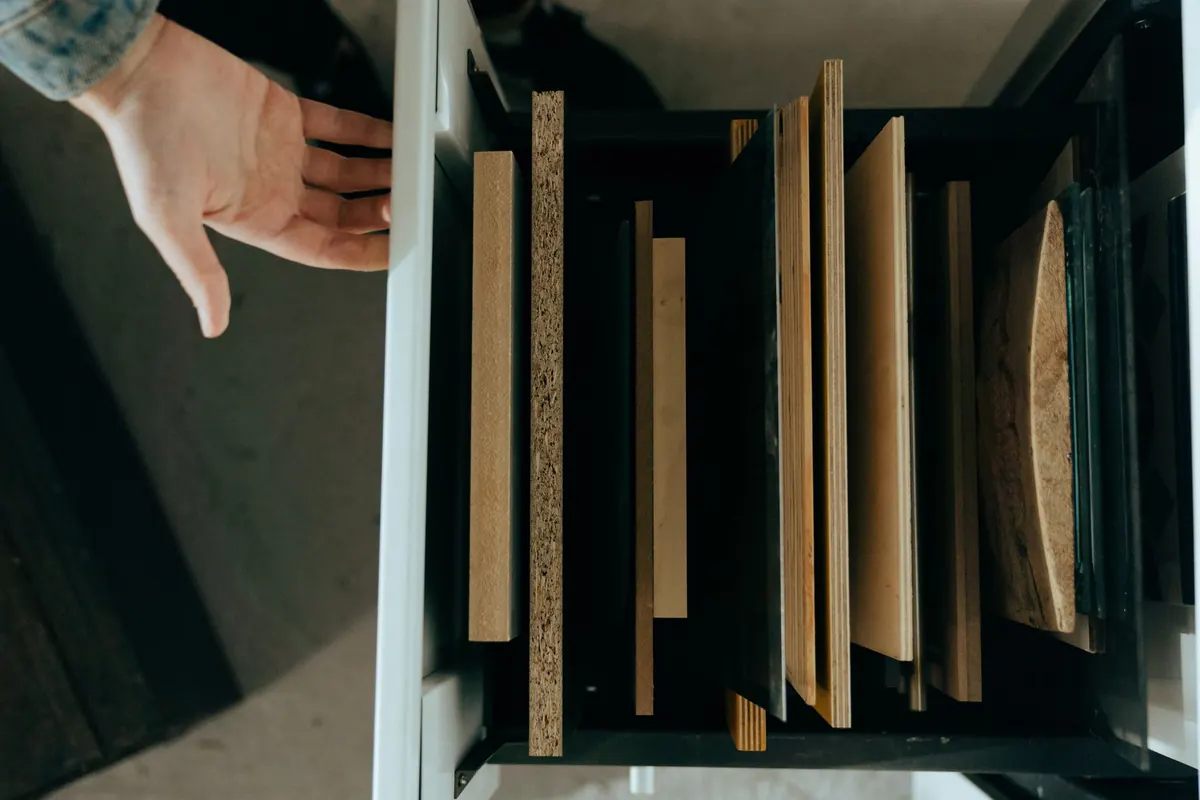
Walk into any decent timber yard and you will find both: neat sheets of Baltic birch plywood, pale and heavy, and racks of solid birch boards with their tight, quiet grain. They come from the same tree, they look similar at a glance, and they cost roughly the same order of money. Then you build something with one instead of the other and discover they are barely related materials at all. One is a stack of thin veneers glued crosswise; the other is a slice of a living thing that still wants to move with the seasons. Choosing between them is mostly a matter of knowing what you are asking the wood to do.
What you are actually buying
Birch plywood is made from thin layers of birch veneer, stacked with the grain of each layer turned roughly 90 degrees to the one below, then pressed and glued. Good Baltic birch — the stuff worth using — has no voids, an odd number of plies, and edges you can sand and leave bare. An 18mm sheet commonly carries around a dozen plies, which is why it weighs more than it looks like it should and why it holds screws far better than the cheap fir plywood at a big-box store.
Solid birch is exactly that: milled lumber, sold in boards of various widths and thicknesses. It is a hard, dense, closed-grain wood, light in colour with a faint warm tint, and it takes a crisp edge off a plane beautifully. It also arrives with whatever stresses the tree grew into it, which is why a board that looks flat on the rack can cup by the weekend.
The one-line version
Plywood is engineered to stay put. Solid wood is engineered by a tree to move. Almost every practical difference between them follows from that.
Cost: sheets versus boards
By volume, decent birch plywood usually costs less than clear solid birch of similar thickness, and it covers far more area per purchase. A single sheet gives you a whole cabinet side or a tabletop; the same money in solid lumber buys you a couple of narrow boards. That math matters most on large, flat panels.
But cost is not just the sticker on the sheet. Plywood wastes less on wide parts and more on edges, which have to be banded or left visible on purpose. Solid birch wastes more in milling — you buy a 25mm board and plane it to 20mm to get it flat and true — and you pay a premium for wide, clear, defect-free stock. Narrow glue-ups, where you joint several 70mm strips into a panel, bring the price of solid wood down considerably and give you a top that looks intentional rather than stingy.
One more line item people forget: finish. Plywood edges soak up finish like a sponge and often need banding plus careful sanding. Solid wood needs the whole face finished, but it rewards you with something you can sand back and repair years later.
Stability and movement
This is where the two materials genuinely part company, and where most beginner mistakes happen.
Plywood's cross-laminated construction fights movement in every direction. A 600mm-wide plywood panel will sit flat on a frame through a humid summer and a dry winter with almost no visible change. That is why it dominates for cabinet carcasses, drawer boxes, jigs, shop furniture, built-ins and anything that has to stay flat against a wall.
Solid birch expands and contracts across its width as humidity changes — noticeably more than along its length. A wide solid top fastened rigidly to a frame will either split or bow; it needs slotted holes, figure-eight fasteners, or a proper button-and-groove arrangement so the wood can slide. A solid panel glued up from narrow strips behaves better than one wide board, and quarter-sawn stock moves less than flat-sawn. If you want a wide solid birch top, plan for movement in the design rather than hoping.
Working the material
Both cut cleanly with sharp tooling, but they ask for different habits.
- Cutting: Score plywood's face veneer with a knife before crosscutting, or use a fine-tooth blade with a zero-clearance insert, and you will avoid the splintered edge that otherwise shows up on the good face.
- Fastening: Plywood takes screws and nails without much complaint. Solid birch is hard and splits near an end — always pre-drill, and keep fasteners back from the end grain.
- Edges: Plywood edges show plies. Either celebrate them with a sanded, sealed edge, or band them with iron-on veneer or a solid birch strip. Solid wood edges are the edge.
- Joints: Dados, rabbets and biscuits suit plywood because its thickness is consistent sheet to sheet. Solid wood needs jointing and planing first, then traditional joinery — mortise and tenon, dovetails, dowels.
- Shaping: Curves and profiles belong to solid birch. Plywood will only bend if you use bendy ply or cut kerfs, and the exposed layers look messy on a shaped edge.
Finishing differences
Birch is notorious for blotching under stain. The grain absorbs pigment unevenly, and a dark stain on pale birch can look patchy and muddy. The reliable fix is a wash coat of thinned shellac or a dedicated sanding sealer before staining, or skip pigment stain entirely and use a dye, which colours more evenly. Gel stains are also more forgiving on birch than thin penetrating stains.
Plywood brings its own set of issues: end grain along the edges drinks finish, and sanding through the face veneer is permanent damage — you cannot sand past that first layer. Work with a random-orbit sander and a light touch near edges, and finish both faces of a panel if it will see humidity from both sides, so it stays balanced.
For a natural look, both materials respond well to a clear oil or a thin lacquer. Solid birch warms to a honey tone with age; plywood's face veneer does the same, but only on the surface, so a scratch or a sanded-through spot will show a lighter patch.
Matching material to project
A short, practical division of labour:
- Choose birch plywood for: cabinet boxes and shelves, drawer bottoms, built-in wardrobes, workshop jigs and sleds, speaker enclosures, a painted tabletop, desks with a frame underneath.
- Choose solid birch for: table and bench tops, chair parts, handles and knobs, turned legs, exposed frames, cutting boards and kitchen items, anything with a shaped or profiled edge.
- Combine them: the most sensible build for many projects is a plywood carcass with solid birch face frames, edging and legs. You get stability where it counts and real wood where hands and eyes meet it.
Before you buy: a five-minute check
At the yard, look at the plywood's cut edge. Tight, even plies with no dark gaps mean a sheet worth paying for; voids and overlapping patches mean trouble later. Check both faces — one is usually better, and that is the one you show. For solid boards, sight down the length for twist, and ask whether it is flat-sawn or quarter-sawn if the width matters to you.
Buy a little extra of either material. Plywood is difficult to match on a second trip because dye lots and veneer colour shift between batches, and solid birch from a different stack will rarely look the same under finish. Store sheets flat on a couple of battens, not leaning against a wall, and let boards acclimatise in the room where the piece will live for a few days before you cut.
Then decide what the project actually needs. If it must stay flat, cover area and take paint or veneer, plywood wins. If it must be shaped, joined, refinished and touched by hand, solid birch wins. Most good furniture uses both, each where it makes sense — which is less a compromise than a proper understanding of what each material is for.
Photo: cottonbro studio / Pexels